![[tex flag]](../../images/usa_vet.png) Heart of Texas World War One, Rem Bios & Records, Mills County Texas
Heart of Texas World War One, Rem Bios & Records, Mills County Texas ![[usa flag]](../../images/tex_flag.png)

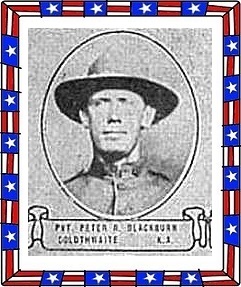
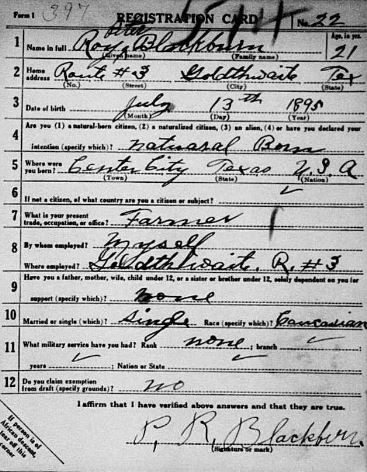
Mr. Peter Roy Blackburn, a single white male living in Goldthwaite, Mills County, Texas and he was working a farm for himself as of June 5, 1917. Peter was tall and medium build with brown color hair and blue eyes and probably a tan complexion. Born in Center City, Mills County, Texas on July 13, 1895 to Robert G. and Tennie L. Blackburn, and was raised in Mills County, Texas. Peter was reported as living with his parents and siblings in Mills County on both the 1900 and 1910 censuses. He registered for the draft in Mills County. His father of Goldthwaite, Texas is listed as next of kin on his Army record.
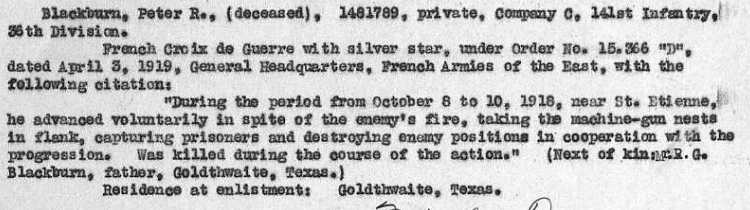
Peter was drafted into federal service for the US Army on May 25, 1918 at Camp Bowie, Texas. Recruit Blackburn was sent to boot camp at Camp Bowie in Fort Worth. Private Blackburn was assigned to Company C 141st Infantry Regiment 36th Division at Camp Bowie. The first units of the 36th Division arrived in France May 31, 1918 and the last on August 14, 1918. Private Blackburn's unit moved to the port of embarkation in Hoboken New Jersey and boarded the transport ship to France on July 26, 1918 for the eleven day voyage to France. The 36th division was stationed at Bar-sur-Aube until September 26, 1918, conducting training with the French Army. The division's Meuse-Argonne operations began October 7, 1918, and it was between Somme-Py and Givry during this battle that Peter was killed in action October 8, 1918, and buried on the battlefield. His father was notified.
![[Army]](../../images/sealArmy.png) Private Peter R. Blackburn was buried in a temporary grave there in France to be later repatriated to America. The Graves Registration Service of the US Army was Peter's new unit. The GRS did an awesome job during and after the battles of WW1. Peter's remains were loaded onto the USAT Wheaton in Antwerp, Belgium on September 20, 1921 and arrived in Hoboken New Jersey October 3, 1921. Then by train to Goldthwaite Texas arriving October 22, 1921. Peter Blackburn was laid to rest in the Center City Cemetery, Mills County, Texas. Survived by his father, his mother passed away February 19, 1918.
Private Peter R. Blackburn was buried in a temporary grave there in France to be later repatriated to America. The Graves Registration Service of the US Army was Peter's new unit. The GRS did an awesome job during and after the battles of WW1. Peter's remains were loaded onto the USAT Wheaton in Antwerp, Belgium on September 20, 1921 and arrived in Hoboken New Jersey October 3, 1921. Then by train to Goldthwaite Texas arriving October 22, 1921. Peter Blackburn was laid to rest in the Center City Cemetery, Mills County, Texas. Survived by his father, his mother passed away February 19, 1918.
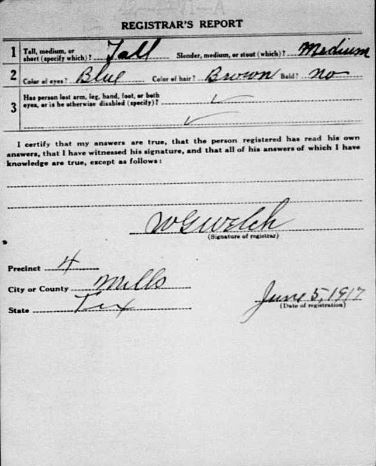
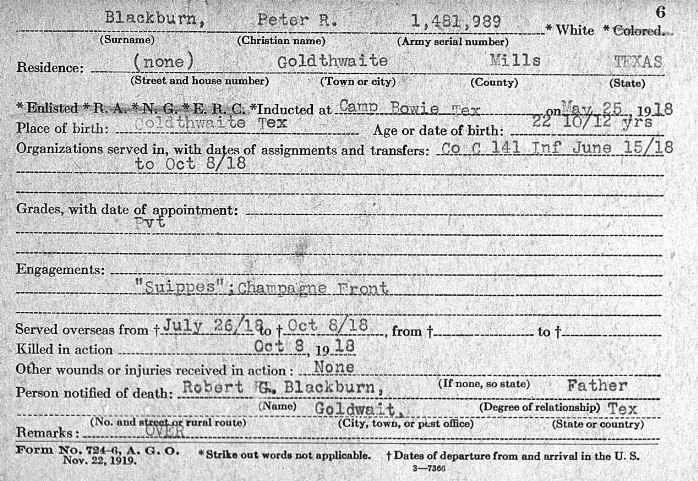
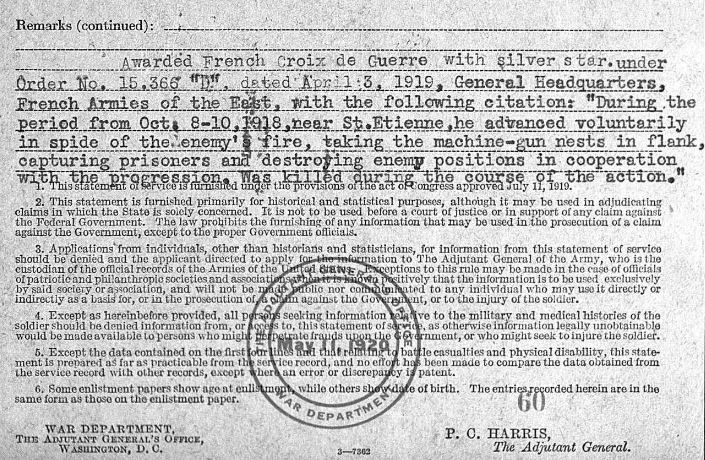
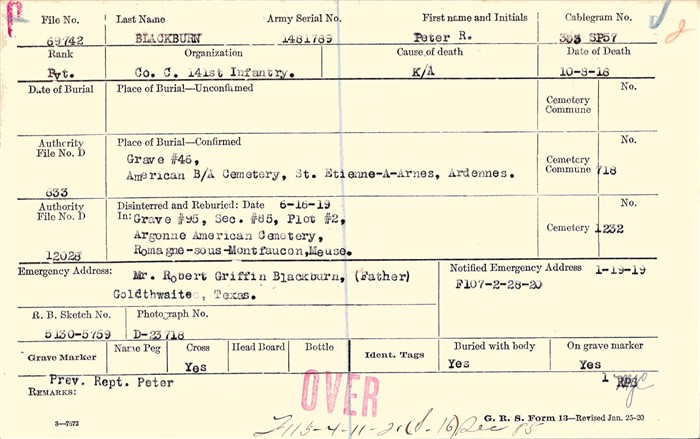
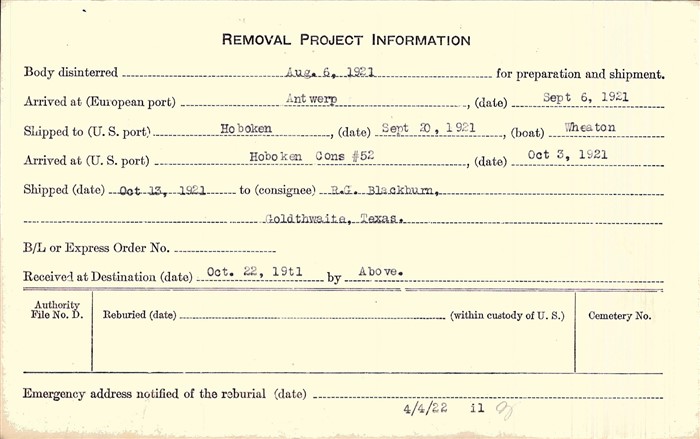

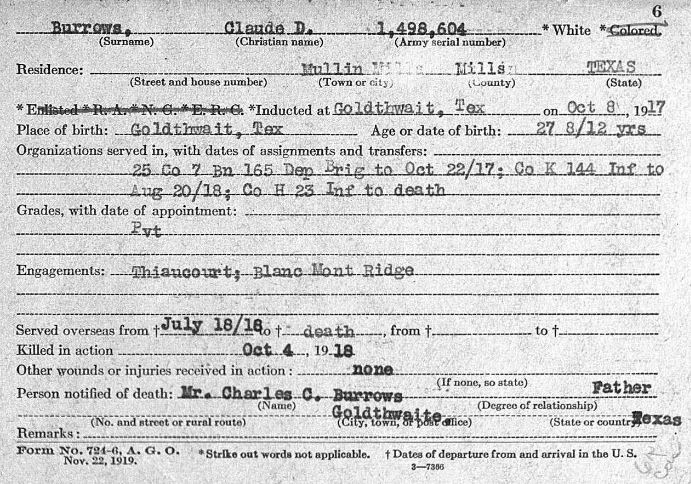
Mr. Claude Dee Burrows, a single white male living in Regency, Mills County, Texas and he was working as a farm laborer for Mr. Burt Burrows as of June 5, 1917. Claude was of medium height and medium build with black hair and blue eyes and probably a tan complexion. Born in Mills County, Texas on February 6, 1890 to Charles C. and Elizabeth 'Bettie' Burrows, and was raised in Mills and Bastrop County, Texas. Claude was reported as living with his parents and siblings in Bastrop County, Texas on the 1900 census. Claude was reported as living with his parents and siblings in Comanche County, Texas on the 1910 census. He registered for the draft in Mills County. His father of Goldthwaite, Texas is listed as next of kin on his Army record.
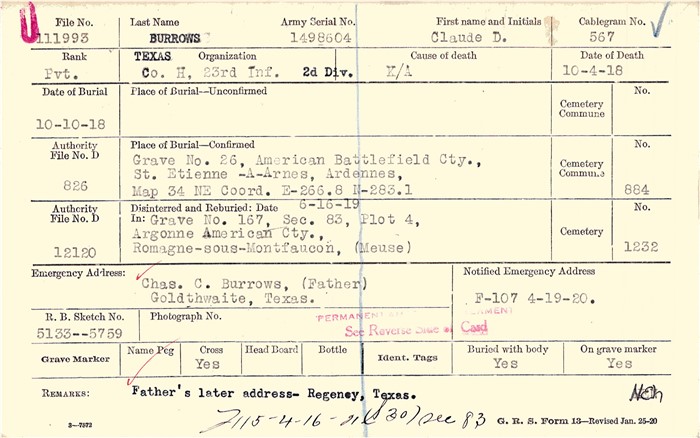
Claude was drafted into federal service for the US Army on October 8, 1917 at Goldthwaite, Texas. Recruit Burrows was sent to boot camp at Camp Travis in San Antonio. Claude was given assignment for training to the 25th Company 7th Training Battalion 165th Depot Brigade. On October 22, 1917 Private Burrows was assigned to Company K 144th Infantry Regiment 36th Division at Camp Bowie in Fort Worth. The first units of the 36th Division arrived in France May 31, 1918 and the last on August 14, 1918. Private Burrows's unit moved to the port of embarkation in Hoboken New Jersey and boarded the transport ship to France on July 18, 1918 for the eleven day voyage to France. The 36th division was stationed at Bar-sur-Aube, and on August 20, 1918 Private Burrows was transferred to the Company H 23rd Infantry Regiment 2nd Division at the vicinity of Nancy. On August 6 the division relieved a French unit in the Marbache sector where it remained until relieved by the 82nd division on August 16, 1918. The division's Saint Mihiel operations were September 12-16, 1918. The division's Meuse-Argonne operations began October 1, 1918, and it was between Thiaucourt and Blanc Mont Ridge during this battle that Claude was killed in action on October 4, 1918, and buried on the battlefield. His father was notified.
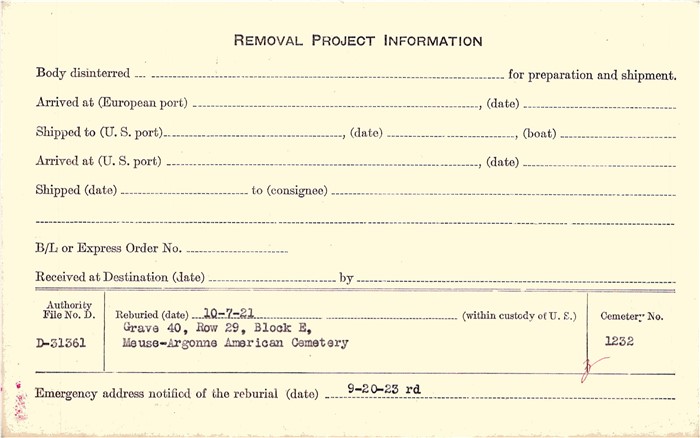
Private Claude D. Burrows was buried in a temporary grave there in France to be later reinterred on October 7, 1921 in the Meuse-Argonne↘ American Cemetery at Romagne-sous-Montfaucon, France. The GRS did an awesome job during and after the battles of WW1. Survived by his parents.
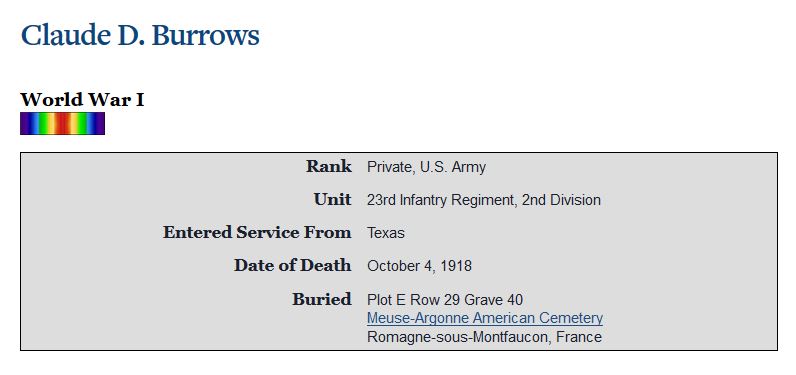
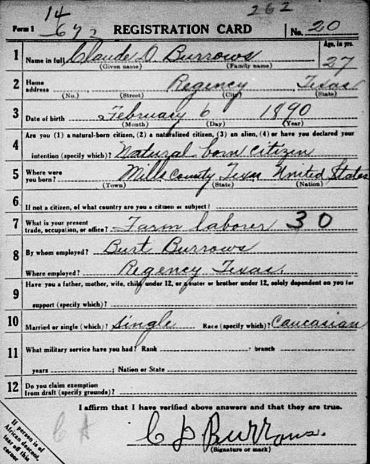
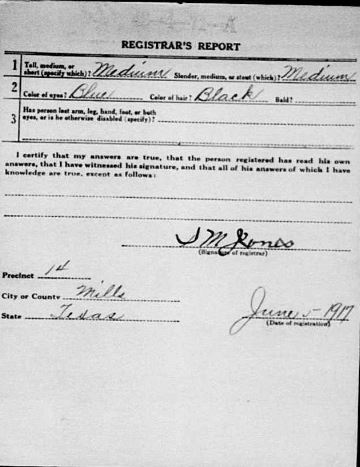

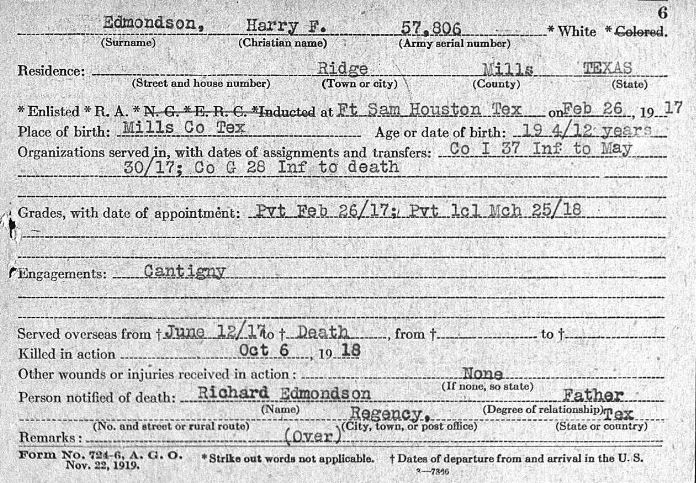
Mr. Harry F. Edmondson, a single white male living in Ridge, Mills County, Texas and likely working as farm laborer for his father as of February 26, 1917. Harry was born in Mills County, October 19, 1897 to Richard J. and Naoma E. Edmondson, and raised there in Mills County. Harry is reported as living with his parents and siblings in Mills County, Texas in both the 1900 and 1910 censuses. His father is listed on his Army record as next of kin living in Regency, Texas
Harry enlisted into federal service for the US Army on February 26, 1917 at Ft Sam Houston, Texas. Recruit Edmondson was trained up at Ft Sam Houston in San Antonio, and then on March 8, 1917 Private Edmondson was sent to Ft McIntosh in Webb County, Texas for training with 37th Infantry Regiment patrolling the Mexican border and he was assigned to Company I 37th Infantry Regiment. Soon after America entered the World War on April 6, 1917, his unit was assigned to the 1st Infantry Division. Private Edmondson was assigned to Company G 28th Infantry Regiment on May 30, 1917 and they moved out to the port of embarkation in New Jersey and boarded the transport ship to France on June 12, 1917 for the 11 day voyage to France.
The First Division being the first American division to enter France, and first to fire a shot at the Germans, for training they were initially under the tactical command of the French Army. Private Edmondson fought in the Luneville sector October 21, 1917 to November 20, 1917, the Ansauville sector January 15, 1918 to April 3, 1918, during which he was promoted to Private 1st Class on March 25, 1918. Then, only a few days of quiet before the division entered the Cantigny sector on April 25, 1918. The Cantigny operation was carried out the morning of May 28th, the division advancing the line three to six hundred yards on a twenty-two-hundred yard front. Division was relieved July 7, 1918. Entered the line the night of July 17, 1918, for the Soissons operation, approximately fifteen kilometers southwest of Soissons. The fighting was severe throughout the attack, especially July 20th and 21st. The division was relieved after having reached Berzy le Sec. Entered the Saizerais section on August 7th. The sector was quiet and the division was relieved August 24, 1918.
St. Mihiel operation; elements of the division commenced entering the sector of September 6, 1918 completing the relief September 11th. Began an attack on September 12th in the Beaumont sector, twenty kilometers northwest of Toul. On September 13th the division was regrouped and held in reserve of the 4th Army Corps. The division had advanced its line fourteen kilometers in nineteen hours. In the operation east of the Argonne and west of the Meuse, the division moved into line October 1st and attacked in the Cheppy sector, one kilometer west of Varennes, continuing the attack until the night of October 11th, when it was relieved. During this battle PFC Edmondson was killed in action on October 6, 1918. His father, Richard Edmondson was notified in Regency, Mills County, Texas.
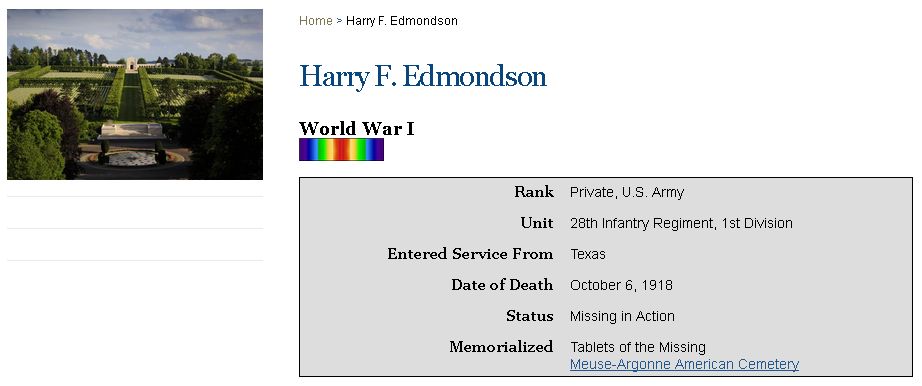
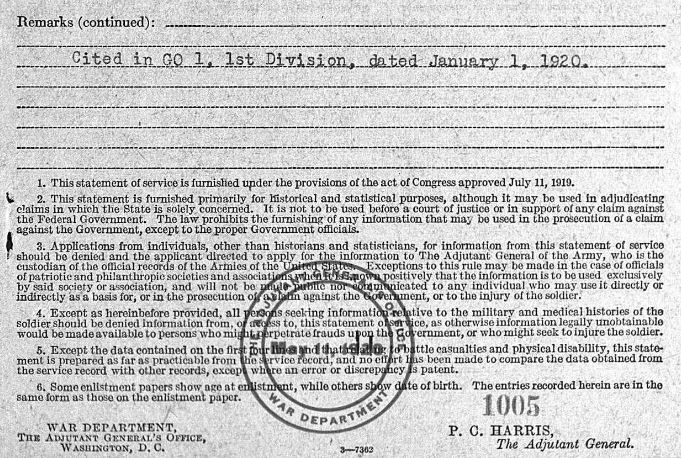
Private 1st Class Harry F. Edmondson was buried in a temporary grave there in France to be later repatriated to Texas. Despite the awesome job GRS did during and after the battles of WW1, Harry's remains were lost or otherwise unidentified, he was missing. Harry has his name on the Tablets of the Missing at the Meuse-Argonne↘ American Cemetery in Romagne-sous-Montfaucon, France. Survived by his parents. Private 1st Class Edmondson was cited for his courage and bravery in G.O.1 by 1st Division dated January 1, 1920.

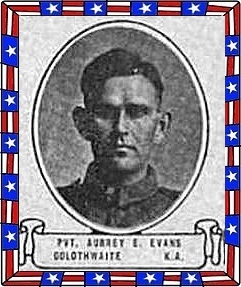
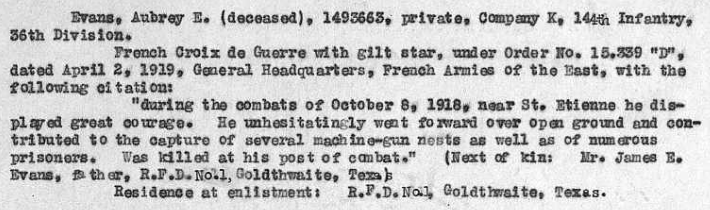
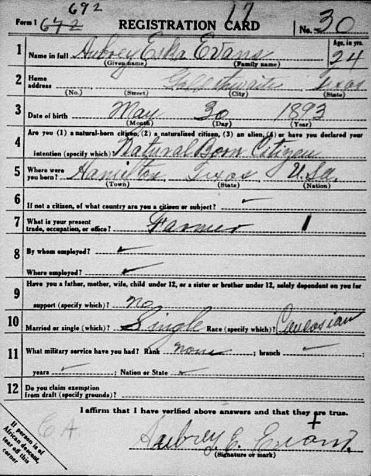
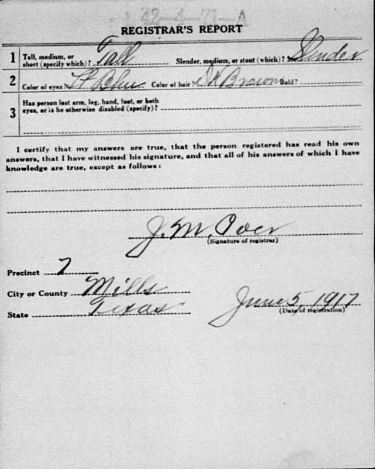
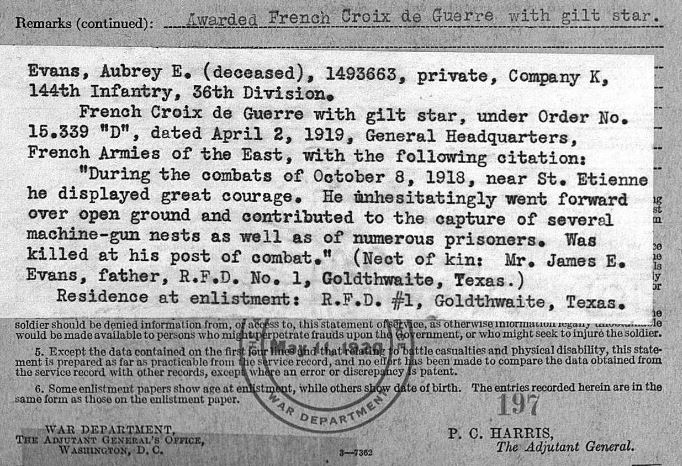
Mr. Aubrey Eska Evans, a single white male living in Goldthwaite, Mills County, Texas and he was working a farm for himself as of June 5, 1917. Aubrey was tall and slender with dark brown hair and light blue eyes and probably a tan complexion. Born in Hamilton, Hamilton County, Texas on May 30, 1893 to James E. and Selena H. Evans, and was raised in Hamilton County, Texas. I did not find Aubrey on a 1900 census. Aubrey was reported as living with his parents and siblings in Mills County, Texas in the 1910 census. He registered for the draft in Mills County. His father of Goldthwaite, Texas is listed as next of kin on his Army record.
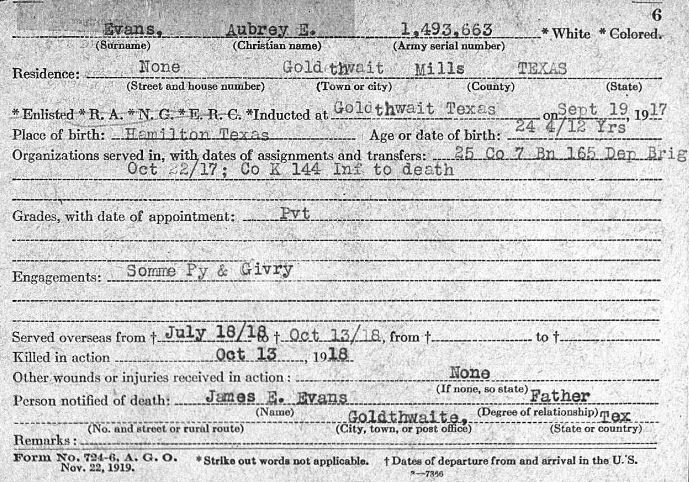
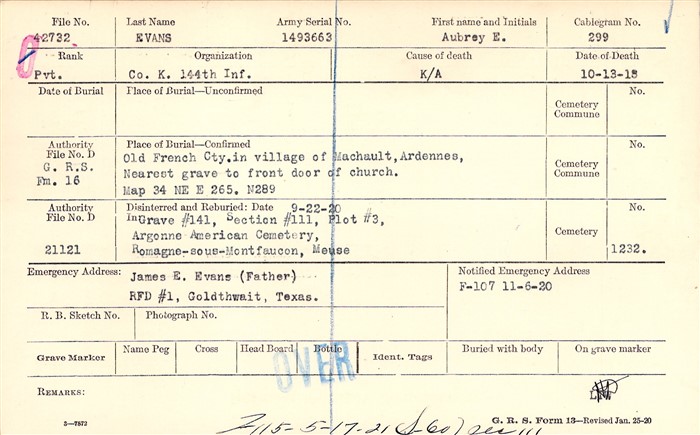
Aubrey was drafted into federal service for the US Army on September 19, 1917 at Goldthwaite, Texas. Recruit Evans was sent to boot camp at Camp Travis in San Antonio. Aubrey was given assignment for training to the 25th Company 7th Training Battalion 165th Depot Brigade. On October 22, 1917 Private Evans was assigned to Company K 144th Infantry Regiment 36th Division at Camp Bowie in Fort Worth. The first units of the 36th Division arrived in France May 31, 1918 and the last on August 14, 1918. Private Evans's unit moved to the port of embarkation in Hoboken New Jersey and boarded the transport ship to France on July 18, 1918 for the eleven day voyage to France. The 36th division was stationed at Bar-sur-Aube until September 26, 1918, conducting training with the French Army. The division's Meuse-Argonne operations began October 7, 1918, and it was between Somme-Py and Givry during this battle that Aubrey was killed in action October 13, 1918, and buried on the battlefield. His father was notified.
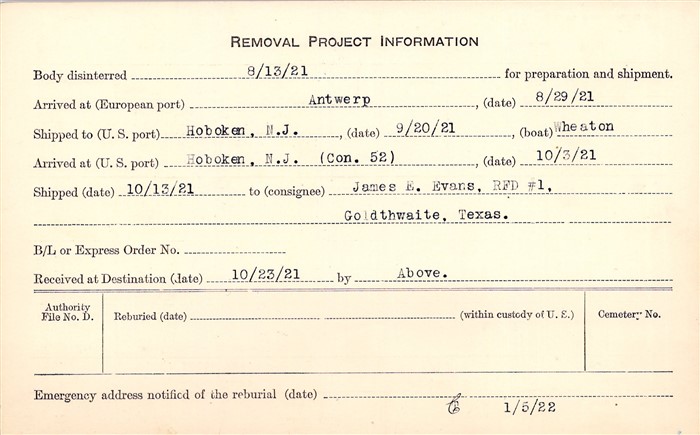
Private Aubrey E. Evans was buried in a temporary grave there in France to be later repatriated to America. The Graves Registration Service of the US Army was Aubrey's new unit. The GRS did an awesome job during and after the battles of WW1. Aubrey's remains were loaded onto the USAT Wheaton in Antwerp, Belgium and departed on September 20, 1921 and arrived in Hoboken New Jersey on October 6, 1921. Then by train to Goldthwaite, Texas arriving October 23, 1921. Aubrey Evans was laid to rest in the North Brown Cemetery, Mills County, Texas. Survived by his parents. Private Aubrey Evans was awarded posthumously the French Croix de Guerre with gilt star on April 2, 1919 for his courage in battle.
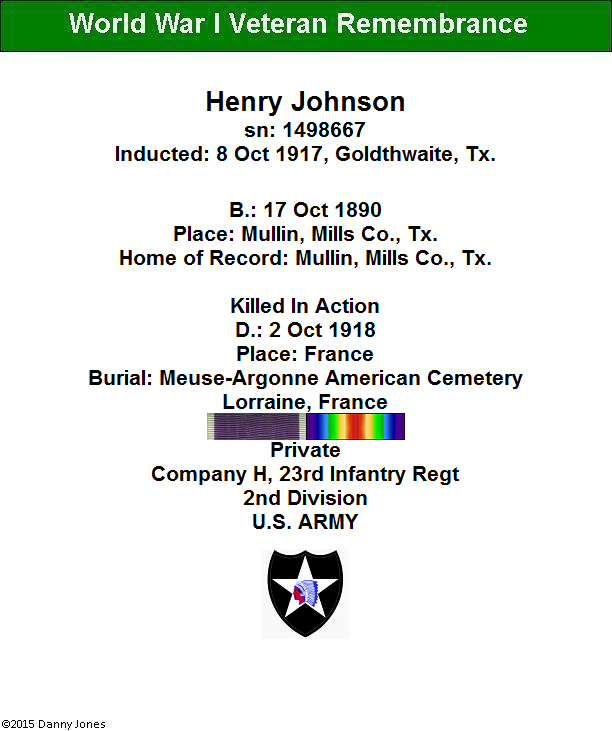
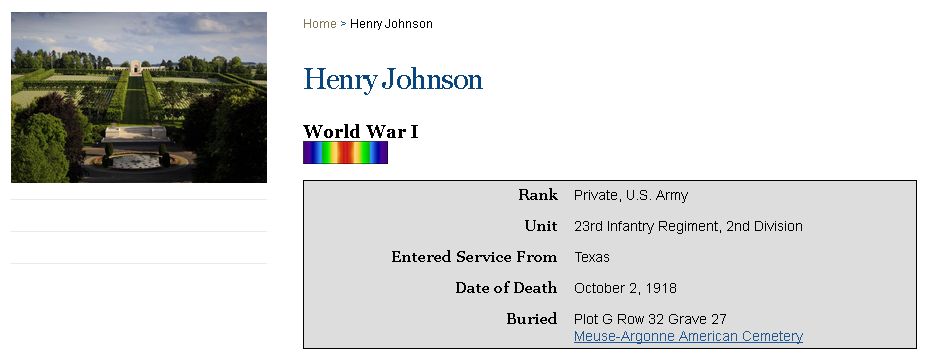
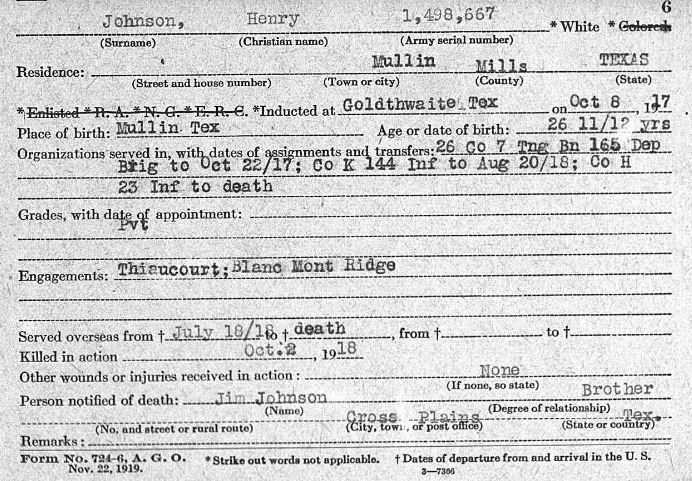
Mr. Henry Johnson, a single white male living in Mullin, Mills County, Texas and he was working as a farm laborer for Mr. W. O. Keley as of June 5, 1917. Henry was of medium height and medium build with light color hair and blue eyes and probably a tan complexion. Born in Mullin, Mills County, Texas on October 17, 1890 to Obediah E. and Ester Catherine Johnson, and was raised in Mills County, Texas. Henry was reported as living with his mother and siblings in Mills County, Texas on the 1900 census, his father died in 1891. Henry was reported as living with his sister as a boarder in Mills County, Texas on the 1910 census. He registered for the draft in Mills County. His brother, Jim Johnson of Cross Plains, Texas is listed as next of kin on his Army record.
Henry was drafted into federal service for the US Army on October 8, 1917 at Goldthwaite, Texas. Recruit Johnson was sent to boot camp at Camp Travis in San Antonio. Henry was given assignment for training to the 26th Company 7th Training Battalion 165th Depot Brigade. On October 22, 1917 Private Johnson was assigned to Company K 144th Infantry Regiment 36th Division at Camp Bowie in Fort Worth. The first units of the 36th Division arrived in France May 31, 1918 and the last on August 14, 1918. Private Johnson's unit moved to the port of embarkation in Hoboken New Jersey and boarded the transport ship to France on July 18, 1918 for the eleven day voyage to France. The 36th division was stationed at Bar-sur-Aube, and on August 20, 1918 Private Johnson was transferred to the Company H 23rd Infantry Regiment 2nd Division at the vicinity of Nancy. On August 6 the division relieved a French unit in the Marbache sector where it remained until relieved by the 82nd division on August 16, 1918. The division's Saint Mihiel operations were September 12-16, 1918. The division's Meuse-Argonne operations began October 1, 1918, and it was between Thiaucourt and Blanc Mont Ridge during this battle that Henry was killed in action on October 2, 1918, and buried on the battlefield. His brother was notified.
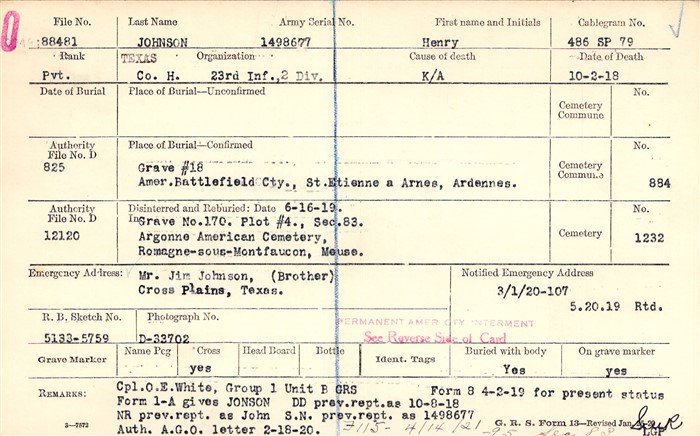
Private Henry Johnson was buried in a temporary grave there in France to be later reinterred on October 7, 1921 in the Meuse-Argonne↘ American Cemetery at Romagne-sous-Montfaucon, France. The GRS did an awesome job during and after the battles of WW1. Preceded in death by his parents.
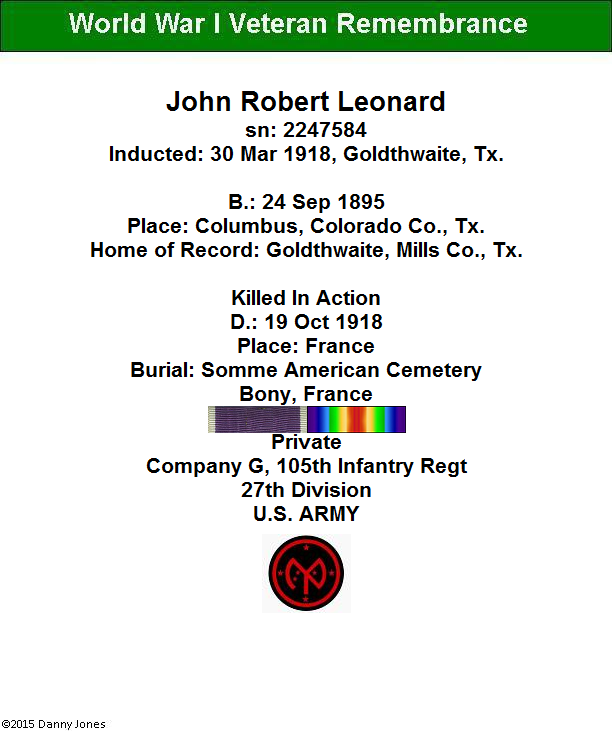
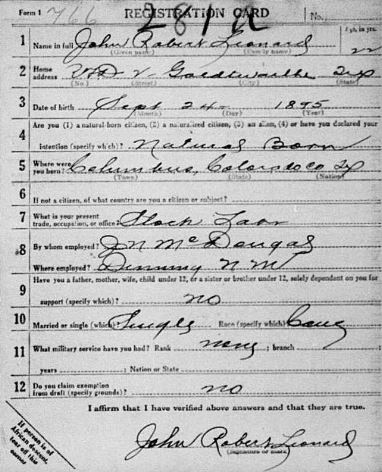
Mr. John Robert Leonard, a single white male living in Goldthwaite, Mills County, Texas and working as a stock laborer for Mr. J. N. McDougal's ranch in Deming, New Mexico as of June 15, 1917. John was medium height and medium build with light brown hair and brown eyes. Born in Columbus, Colorado County, Texas on September 24, 1895 to Benjamin S. and Helen Leonard, and raised in Colorado and Travis County, Texas. John is reported living with his parents and siblings in Travis County, Texas on the 1900 census. John is reported living with his parents and siblings in Mills County, Texas on the 1910 census. His father is listed on his Army record as next of kin living in Goldthwaite, Texas.
John was drafted into federal service for the US Army on March 30, 1918 at Goldthwaite, Mills County, Texas. Recruit Leonard was sent boot camp at Camp Travis in San Antonio. John was in Camp Travis for training with the 28th Company 7th Training Battalion 165th Depot Brigade. Private Leonard was transferred to 6th Company 2nd Replacement Battalion 1st Replacement Regiment at Camp Gordon, Georgia on April 22, 1918. He was transferred to Recruit Detachment 27th Division at Camp Stuart, Virginia on May 15, 1918. On May 23, 1918 Private Leonard was assigned to Company A 2nd Corps Replacement Battalion, moved to the port of embarkation in Newport News, Virginia and boarded the transport ship to France on June 6, 1918 for the eleven day voyage to France.
John's company entered France and spent time training. John was assigned to the Company G 105th Infantry Regiment 27th Division and then entered the line with the British units opposite Mt. Kemmel. On August 20, 1918, the division moved to the Dickebush sector, Belgium which was occupied next day. On August 31st the division was a front-line division in the attack on Vierstandt Ridge, the 30th Division on its left, 34th British Division on its right. As part of the 2d Corps (U.S.) 4th British Army, the division was in action near Bony, September 24th to October 1st. On October 12th it again entered the line in the St. Soupiet sector crossing the Seille River in the attack on Jonc de Mer Ridge. During the Ypres-Lys operations John Leonard was killed in action on October 19, 1918. His father was notified.
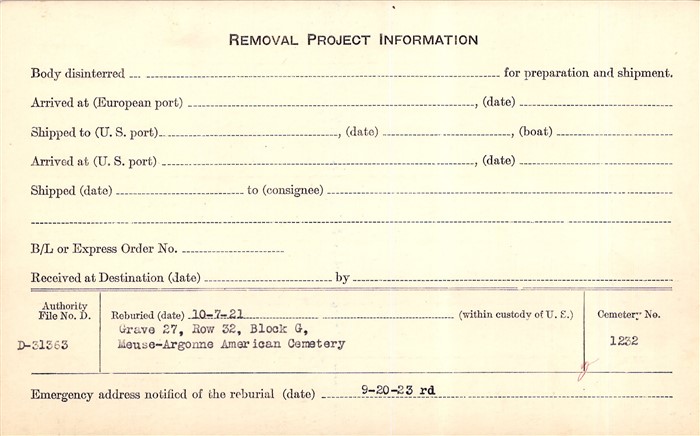
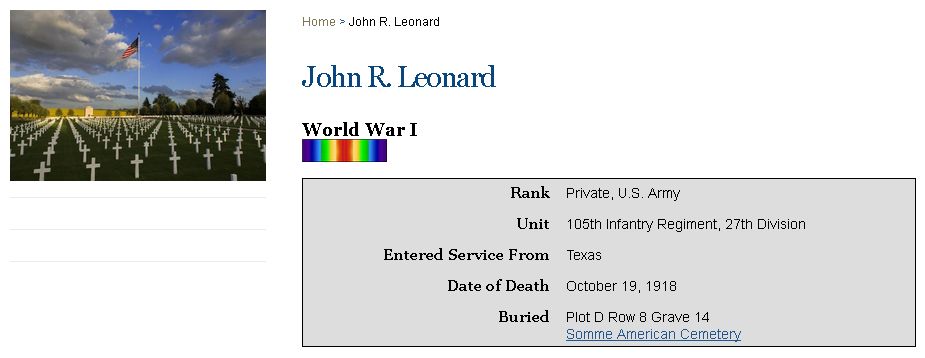
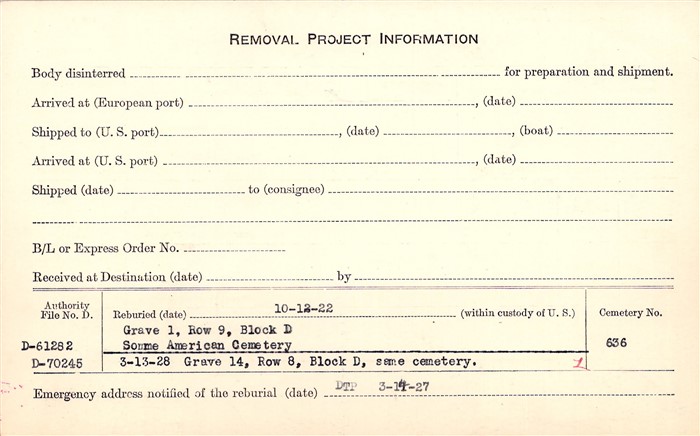
Private John R. Leonard was buried in a temporary grave there in France to be later reinterred on October 12, 1922 in the Somme↘ American Cemetery, Bony, Picardie, France. The GRS did an awesome job during and after the battles of WW1. Survived by his parents.
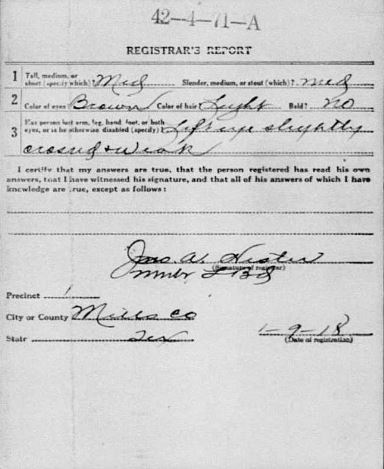
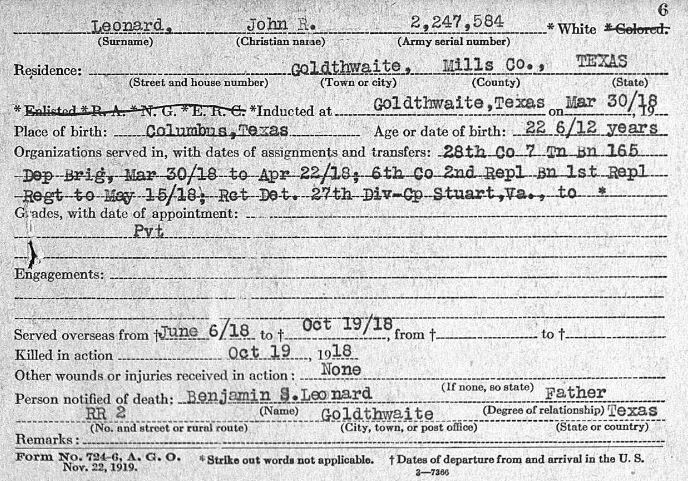
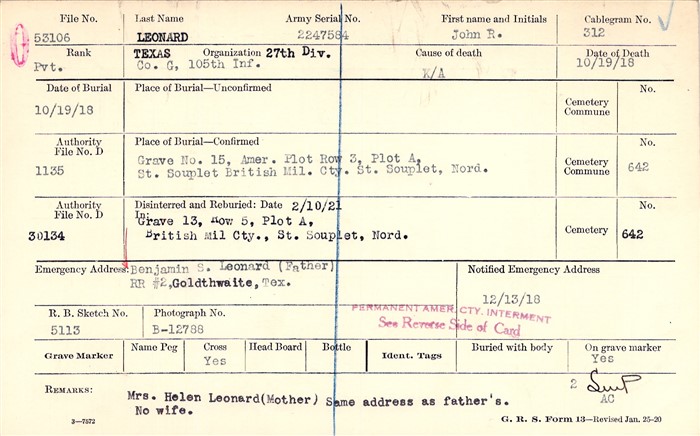

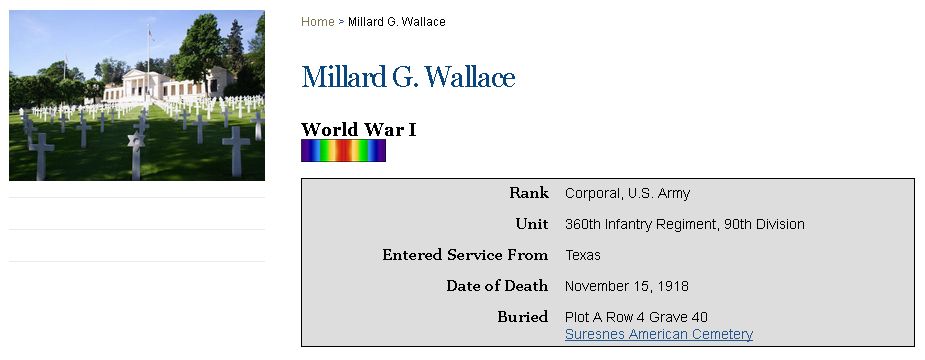
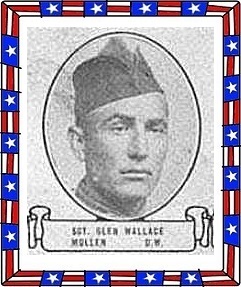
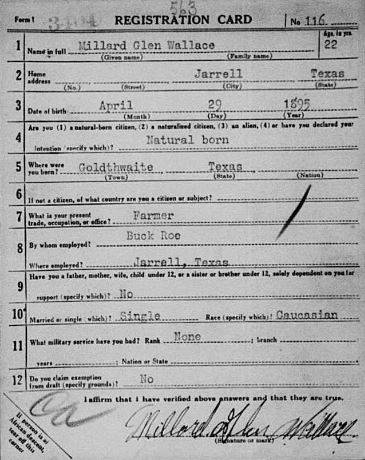
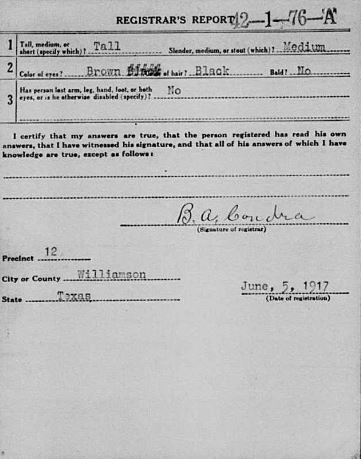
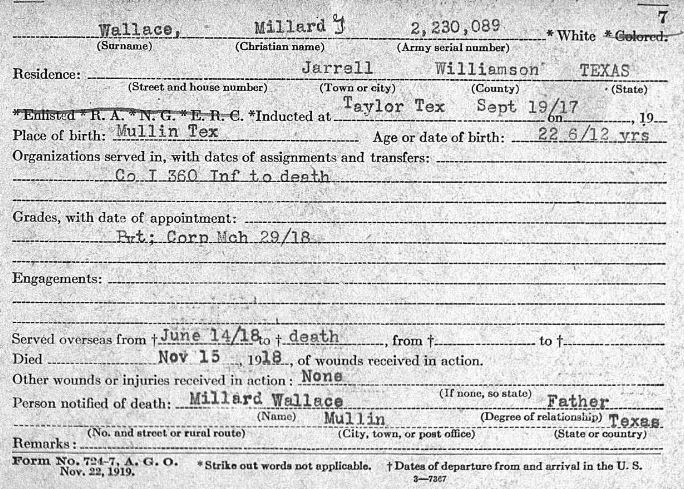
Mr. Millard Glen Wallace, a single white male living in Jarrell, Williamson County, Texas and working as a farm laborer for Mr. Buck Roe as of June 5, 1917. Millard was tall and medium build with black hair and brown eyes, and probably a very tan complexion from all of the farm work. Born in Goldthwaite, Mills County, April 29, 1895 to Millard F. and Emma J. Wallace, and raised there in Mills County during his childhood. He was reported living with his parents and siblings in Mills County in the 1900 and 1910 censuses. Millard moved to the Jarrell area sometime between 1910 and 1917. On Millard's Army record his father is listed as next of kin and living in Mullin, Texas.
Millard was drafted into federal service for the US Army on September 19, 1917 at Taylor, Texas. He was sent to boot camp at Camp Travis in San Antonio. Millard was in Camp Travis for training with the 165th Depot Brigade. Private Wallace was assigned to Company I 360th Infantry Regiment in the 90th Infantry Division. Millard was promoted to Corporal on March 29, 1918. His Company I 360th Infantry Regiment moved out to Camp Mills New York and then to the port of embarkation in Hoboken New Jersey and boarded the transport ship to England on June 14, 1918 for the 11 day voyage to England. But then, only a few days after reaching England Millard's company entered France and spent time training near Rouvres France for six weeks at eight hours per day. On August 19, 1918, the division moved to the vicinity of Toul. This move was scarcely completed when the division was ordered to relieve the 1st Division in the line in the Villers-en-Haye sector north of Toul, which was completed on August 24, 1918.
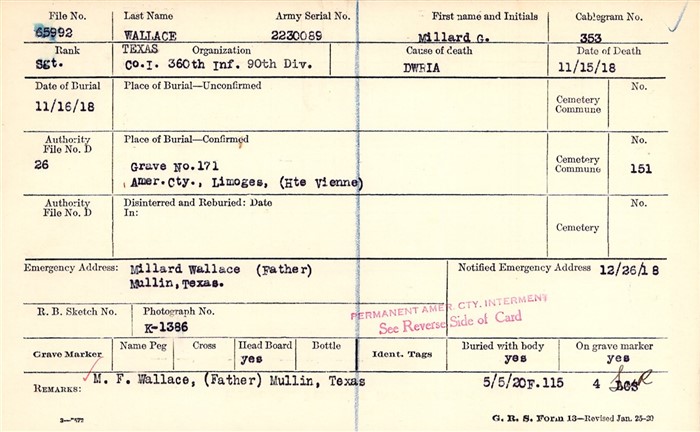
The 90th division's St. Mihiel operation was September 12-16, 1918. The division remained in line in the Puvenelle sector until October 10, 1918. Meuse-Argonne operations October 13 to November 11, 1918. Millard was wounded in action on the battlefield during the division's Meuse-Argonne operations. Corporal Wallace died of wounds on November 15, 1918. His father was notified.
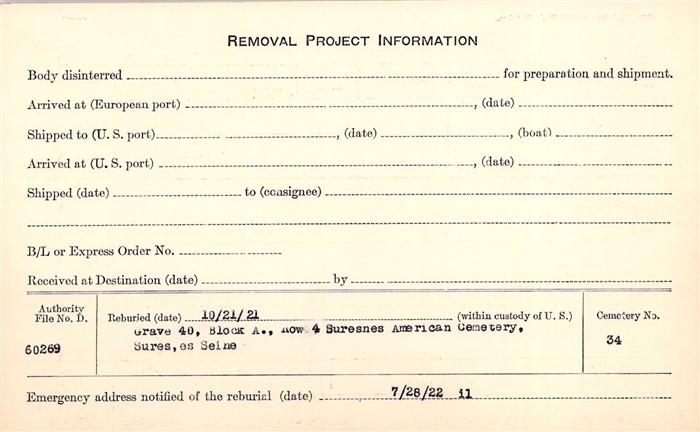
Corporal Millard G. Wallace was buried in a temporary grave there in France to be later reinterred on October 21, 1921 in the Suresnes↘ American Cemetery at Suresnes, France. The GRS did an awesome job during and after the battles of WW1. Survived by his parents.

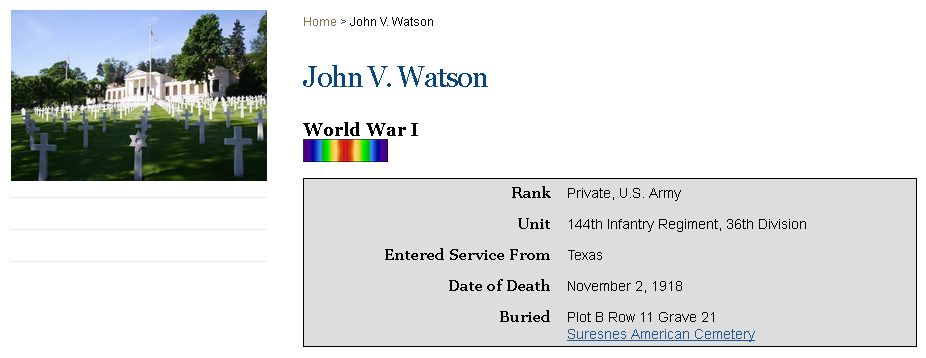
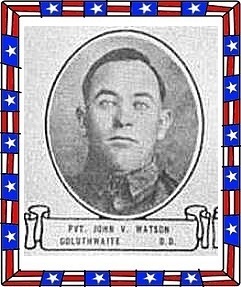
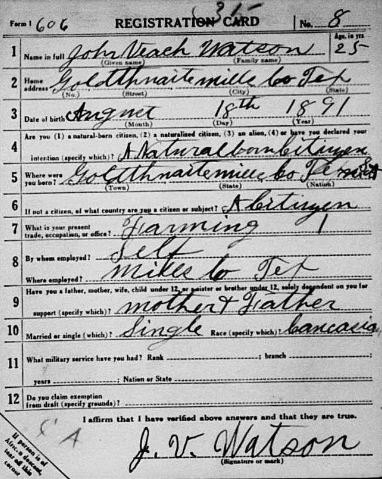
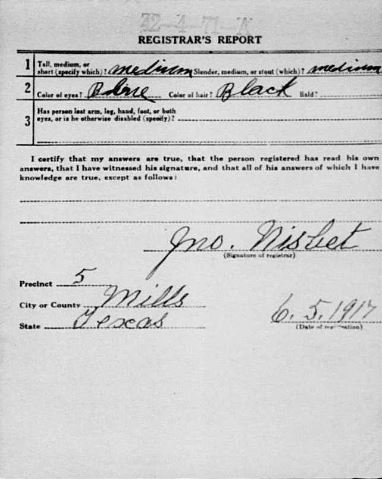
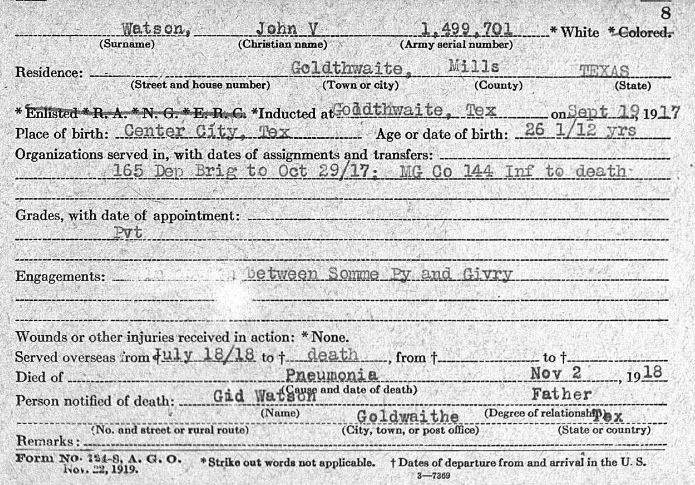
Mr. John Veach Watson, a single white male living in Goldthwaite, Texas and working a farm for himself as of June 5, 1917. John was of medium height and medium build with black hair and blue eyes, and probably a very tan complexion from all of the farm work. Born in Goldthwaite, Mills County, Texas on August 18, 1891 to Gideon and Matilda Watson and he was raised in Mills County, Texas. He was reported living with his parents and siblings in Mills County, Texas in both the 1900 and 1910 censuses. His father of Goldthwaite, Texas is listed as next of kin on his Army record.
John was drafted into federal service for the US Army on September 19, 1917 at Goldthwaite, Texas. Recruit Watson was sent to boot camp at Camp Travis in San Antonio on September 19, 1917. Private Watson was in Camp Travis for training with the 165th Depot Brigade. He was there until October 29, 1917 then transferred to Camp Bowie in Fort Worth and was assigned to the Machine Gun Company 144th Infantry Regiment of the 36th Infantry Division. The first units of the 36th Division arrived in France May 31, 1918 and the last on August 14, 1918. Private Watson's unit moved to the port of embarkation in Hoboken New Jersey and boarded the transport ship to France on July 18, 1918 for the eleven day voyage to France. The 36th division was stationed at Bar-sur-Aube until September 26, at which time it moved by rail to the area between Epernay and Chalons and established headquarters at Pocancy, Department of the Maine. Here it remained 10 days, as a reserve of the French group of armies of the center, attached to the French Fifth Army for purposes of supply.
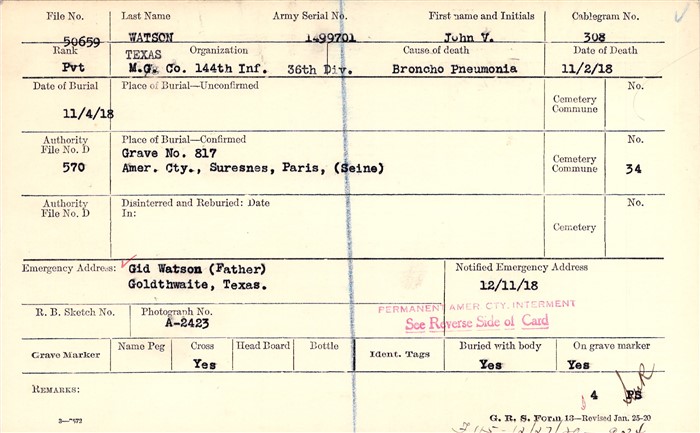
To the north, only a short distance, the Meuse-Argonne operation was under way. The American attack between the Argonne and the Meuse was being aided by the French Fourth Army in the Champagne just to the west. In the latter sector the enemy stubbornly resisted every attack, and on October 3 the 36th Division was transferred to the French Fourth Army, with which the American 2d Division was already serving. On the night of October 4 units of the division began moving from the Pocancy area to the vicinity of Suippes and Somme-Suippes. Meuse-Argonne operation, October 7-26, 1918. The division was then assembled in the Suippes-Somme-Suippes area and from this point moved to the Triaucourt area and established headquarters at Conde-en-Barrois. Here it remained until the signing of the armistice as a unit of the American First Army. Private Watson died of pneumonia on November 2, 1918, just nine days before the armistice. His father was notified.
Private John V. Watson was buried in a temporary grave there in France to be later reinterred on August 8, 1921 in the Suresnes↘ American Cemetery, Suresnes, France. Survived by his parents.
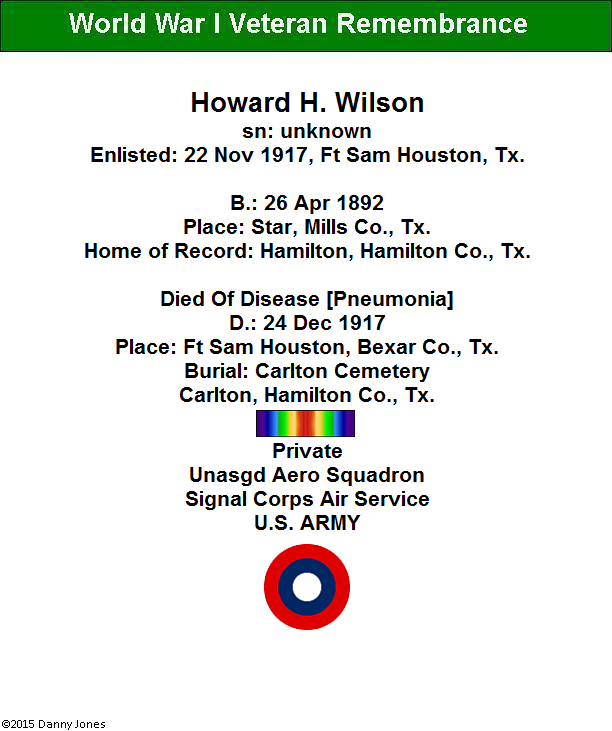
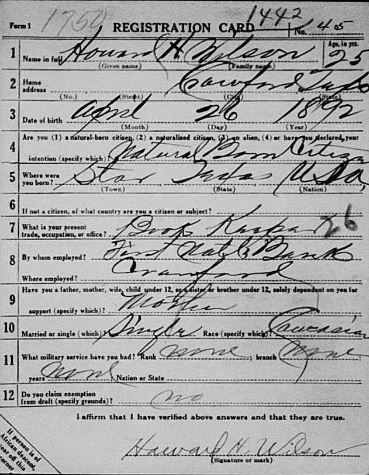
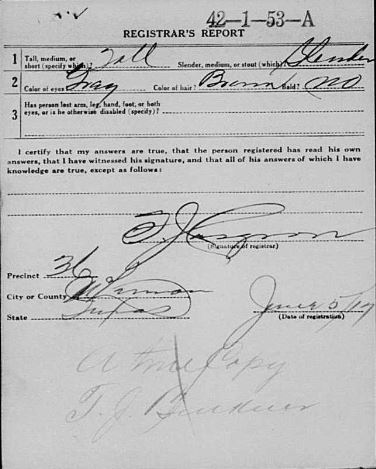
Mr. Howard H. Wilson, a single white male living in Crawford, McLennan County, Texas and working as a book keeper for First National Bank as of June 5, 1917. Howard was tall and slender with brown hair and gray eyes, and probably a normal complexion. Born in Star, Mills County, Texas on April 26, 1892 to John C. and Margaret 'Margie' (Shockley) Wilson and he was raised in Mills and Comanche County. His father died in 1896. He was reported living with his mother and brother Rufus in the home of Margie's brother Tom in Comanche County, Texas in the 1900 census. He was reported living with his mother and brother in Hamilton County, Texas in the 1910 census. His mother of Hamilton, Texas is listed as next of kin on his Army record.
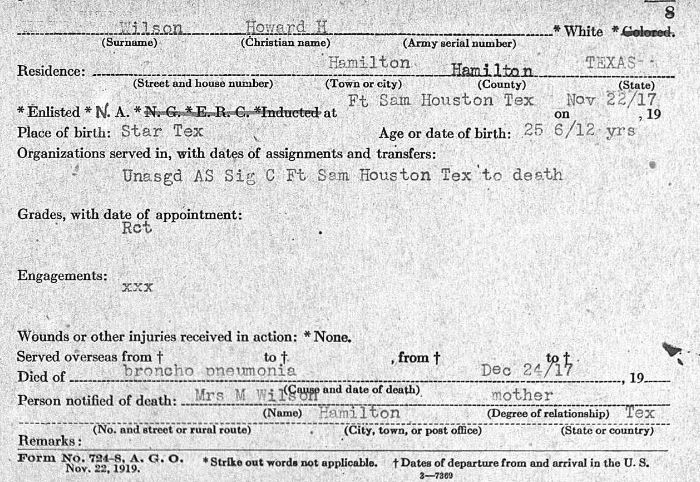
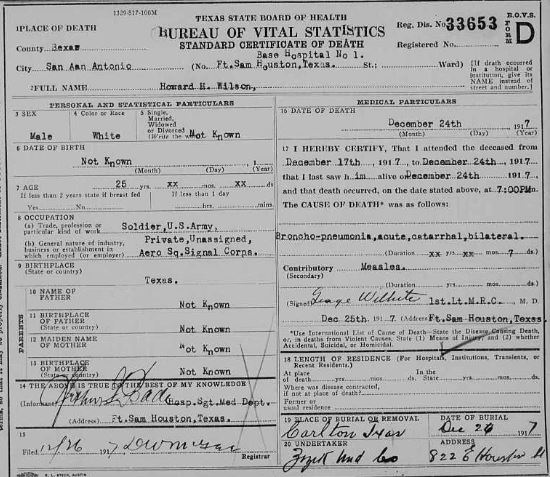
Howard was enlisted into federal service for the US Army on November 22, 1917 at Ft Sam Houston, Texas. Recruit Wilson was unassigned to the Aerial Section of the Signal Corps at Ft Sam Houston. Howard was there only four weeks when he got sick, probably the influenza, and died of pneumonia on December 24, 1917. His mother was notified in Hamilton, Texas.
Private Howard H. Wilson's body was sent by train to Hamilton, Texas and was laid to rest in the Carlton Cemetery, Hamilton County, Texas on December 26, 1917. Survived by his mother.